
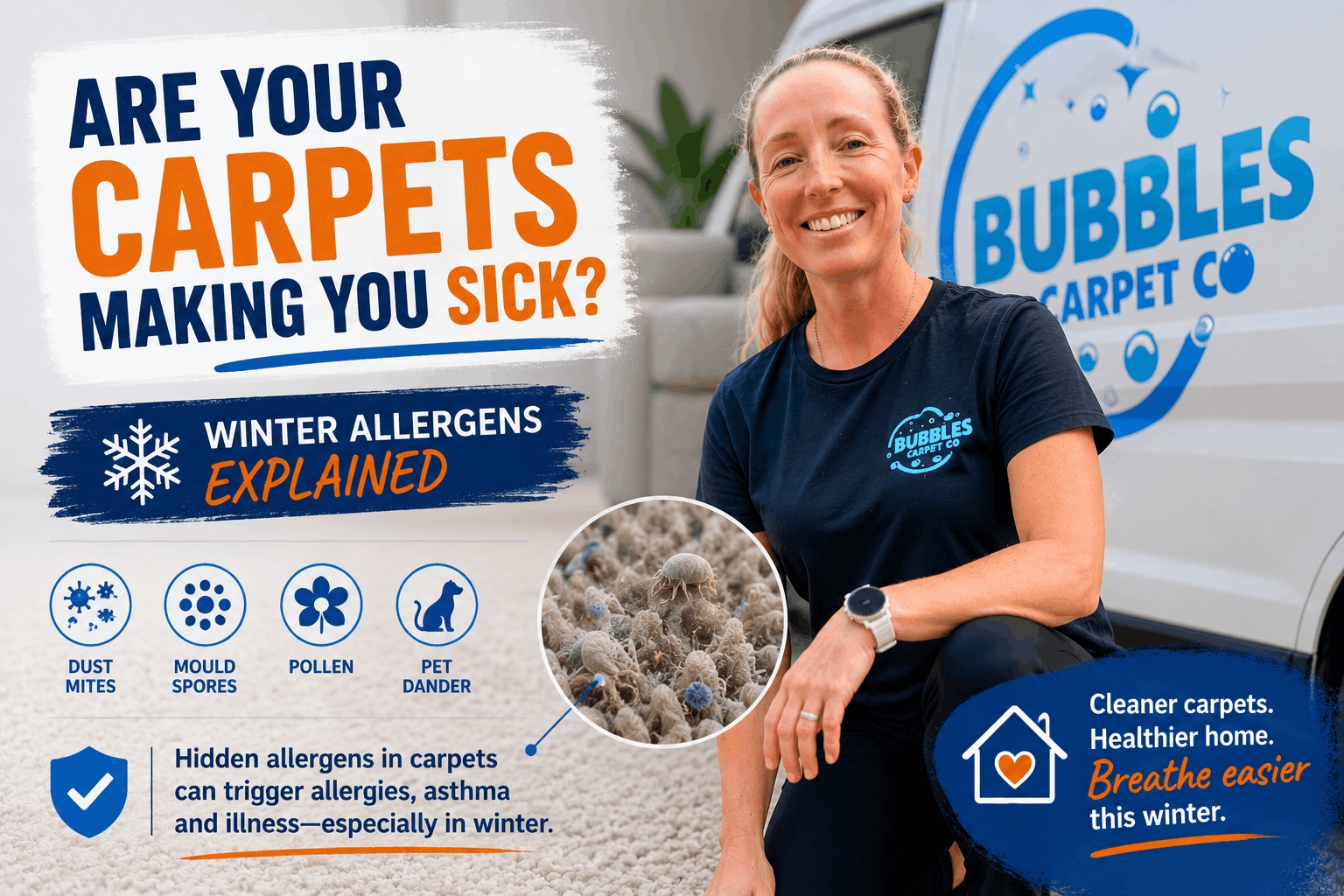
As winter settles in on the Mid North Coast, many people spend more time indoors — often without realising that their carpets could be affecting their health.
While carpets make homes feel warm and comfortable, they can also trap allergens that build up over time, especially during cooler months.
If your home feels stuffy, triggers allergies, or has a lingering musty smell, your carpets could be the reason.
Why Winter Makes Carpet Allergens Worse
During winter, homes are more closed off to retain heat. While this keeps you comfortable, it also reduces ventilation and traps airborne particles indoors.
- Windows stay closed for longer periods
- Airflow is limited
- Moisture levels increase inside the home
This creates the perfect environment for allergens to build up and circulate.
👉 Learn how winter dampness affects your carpets
Common Allergens Found in Carpets
Carpets act like a filter, trapping particles that would otherwise float in the air. Over time, this buildup can impact indoor air quality.
1. Dust Mites
These microscopic organisms thrive in warm, humid environments and feed on dead skin cells trapped in carpet fibres.
2. Mould Spores
Moisture trapped in carpets can lead to mould growth, releasing spores into the air.
3. Pet Dander
Hair, skin flakes, and outdoor debris brought in by pets can accumulate deep within carpets.
4. Pollen and Outdoor Debris
Even in winter, pollen and fine particles can enter your home and settle into carpet fibres.
Signs Your Carpets May Be Affecting Your Health
Many people don’t immediately connect their symptoms to carpets. Watch for these signs:
- Frequent sneezing or coughing indoors
- Watery or itchy eyes
- Worsening allergy or asthma symptoms
- Persistent musty odours
If symptoms improve when you leave the house, your indoor environment — including your carpets — may be the cause.
How to Reduce Allergens in Your Carpets
✔ Vacuum Regularly
Use a high-quality vacuum with a HEPA filter to remove fine particles and allergens.
✔ Improve Ventilation
Open windows during the day to allow fresh air to circulate and reduce indoor pollutant levels.
✔ Control Moisture
Reducing humidity helps prevent mould and dust mite growth.
👉 Learn how to prevent mould and musty smells in carpets
✔ Clean Spills Immediately
Moisture left untreated can quickly turn into a breeding ground for bacteria and mould.
Why Professional Carpet Cleaning Is Important
While regular vacuuming helps, it only removes surface-level dirt. Allergens can settle deep into carpet fibres where household cleaning can’t reach.
Professional carpet cleaning:
- Removes deep-set allergens and bacteria
- Improves indoor air quality
- Reduces triggers for allergies and asthma
👉 Book professional carpet cleaning on the Mid North Coast
👉 Follow our winter carpet care checklist for ongoing maintenance
Final Thoughts
Your carpets play a bigger role in your home’s health than you might think.
During winter, when homes are closed and airflow is reduced, allergens can build up quickly — affecting both comfort and wellbeing.
By staying proactive and keeping your carpets clean, you can create a healthier indoor environment for you and your family.
Frequently Asked Questions
Can carpets cause allergies in winter?
Yes, carpets can trap allergens like dust mites, mould spores, and pet dander, which may trigger allergy symptoms.
How often should I vacuum to reduce allergens?
At least 2–3 times per week, especially in high-traffic areas.
Does professional cleaning help with allergies?
Yes, it removes deep-seated allergens that regular vacuuming cannot reach.
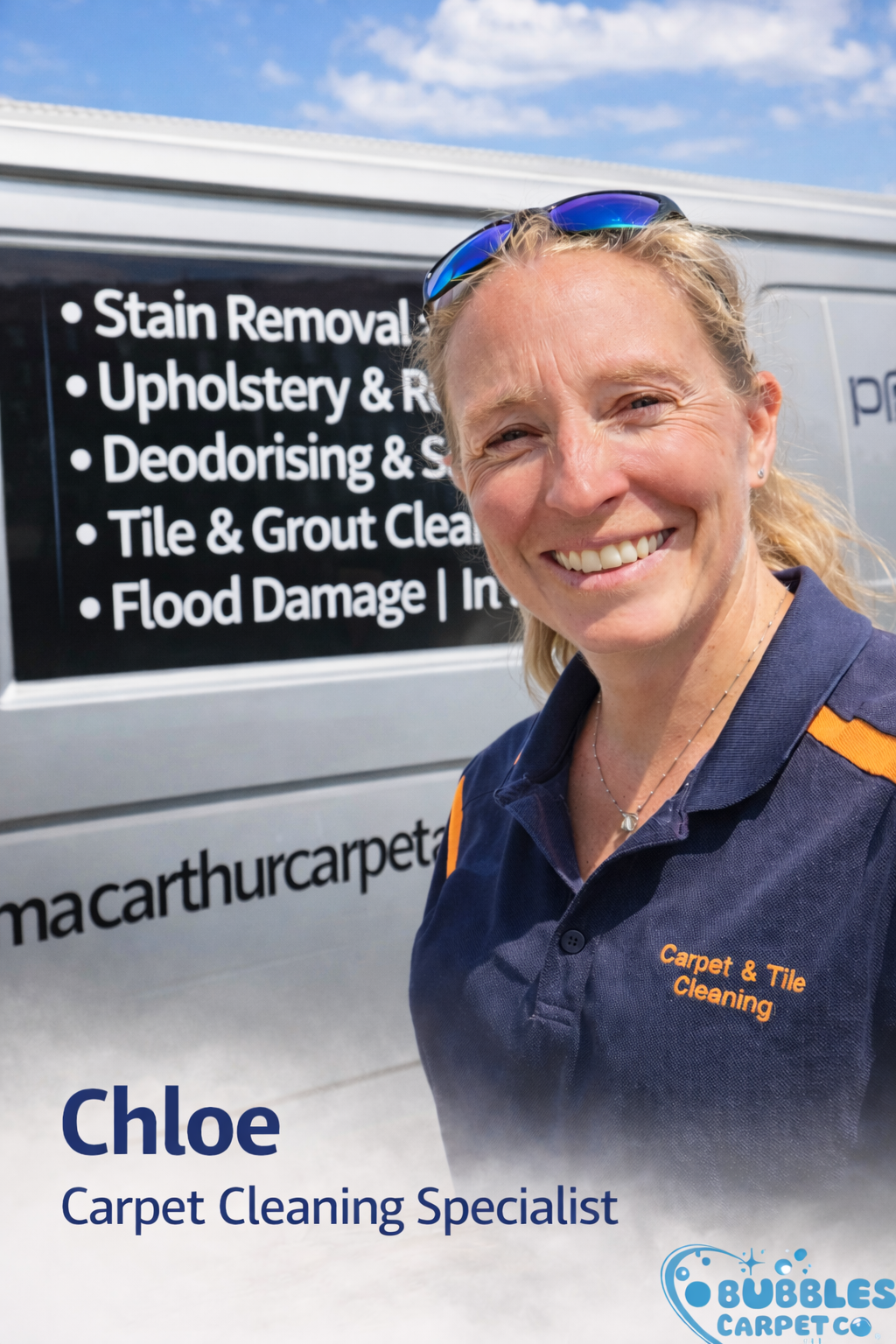
Chloe is a professional carpet and upholstery cleaning specialist at Bubbles Carpet Co, serving homes across the Mid North Coast of NSW. With years of hands-on experience working in coastal properties, she has developed deep expertise in dealing with common local carpet issues such as sand build-up, salt air exposure, humidity, mould risks, and seasonal dirt accumulation.
Through her daily work cleaning carpets in beachside homes, family residences, and holiday rentals, Chloe understands how the Mid North Coast environment uniquely affects carpets and flooring materials. She regularly works with professional steam-cleaning equipment and industry-approved cleaning solutions to restore carpets safely while extending their lifespan.
Chloe shares practical cleaning advice and maintenance tips through the Bubbles Carpet Co blog, helping homeowners learn how to protect their carpets from everyday wear, coastal conditions, pets, and seasonal changes.
Her articles are based on real on-site cleaning experience, ensuring homeowners receive trusted, practical advice that works in real homes — not just theory.
When she’s not helping clients refresh their carpets, Chloe enjoys spending time with family and exploring the beautiful beaches and coastal communities of the Mid North Coast.